This content may contain affiliate links. See my full disclosure here.
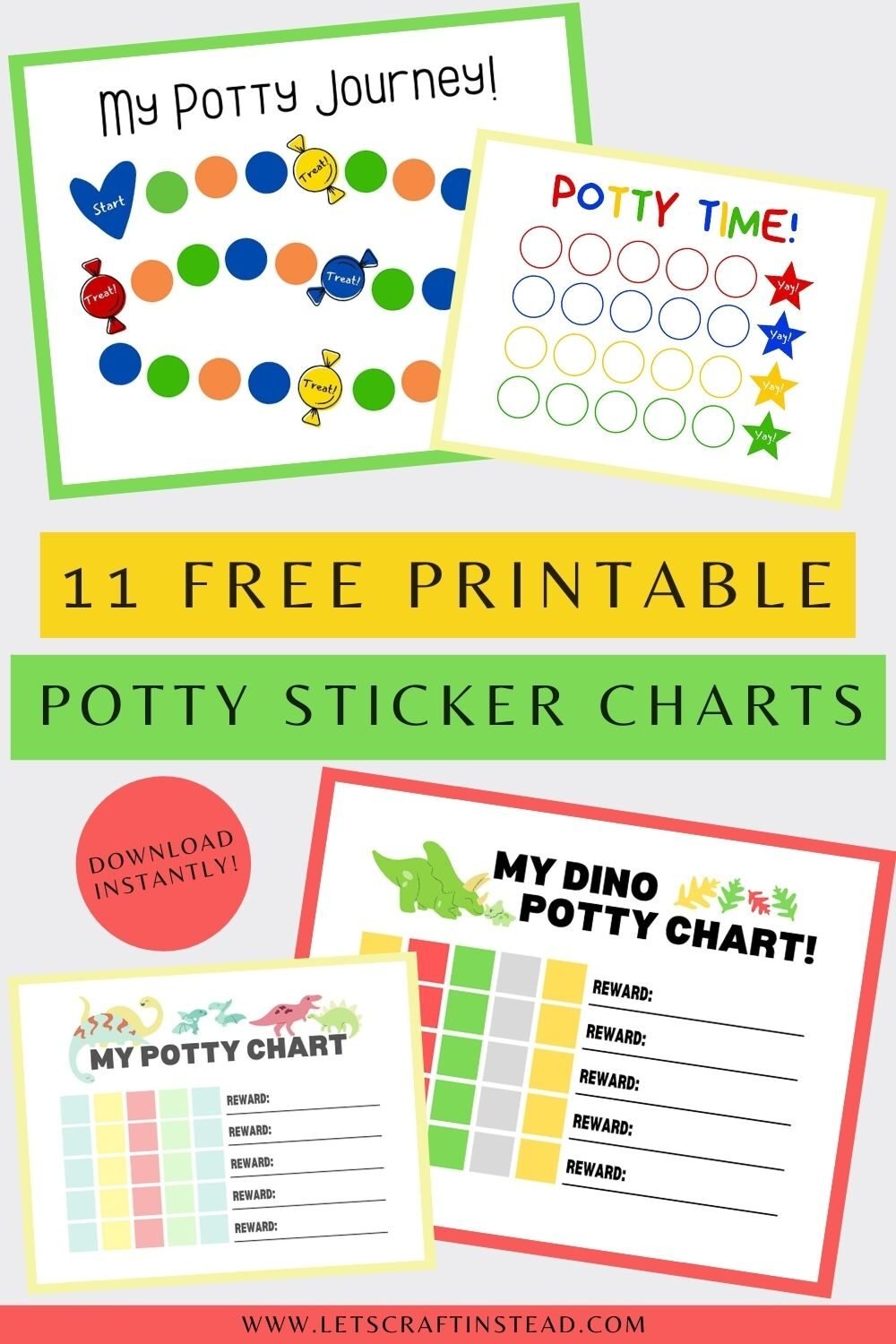
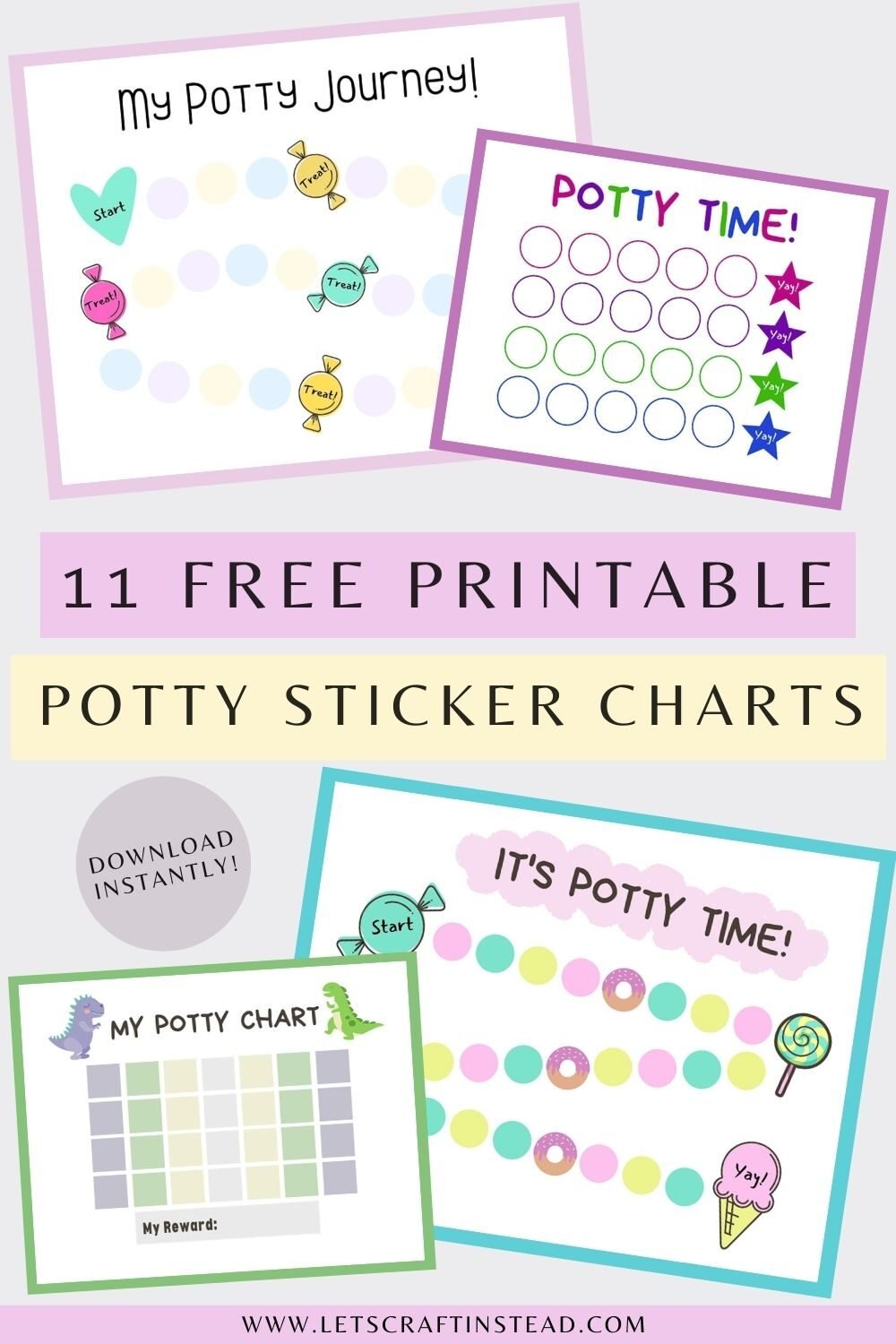
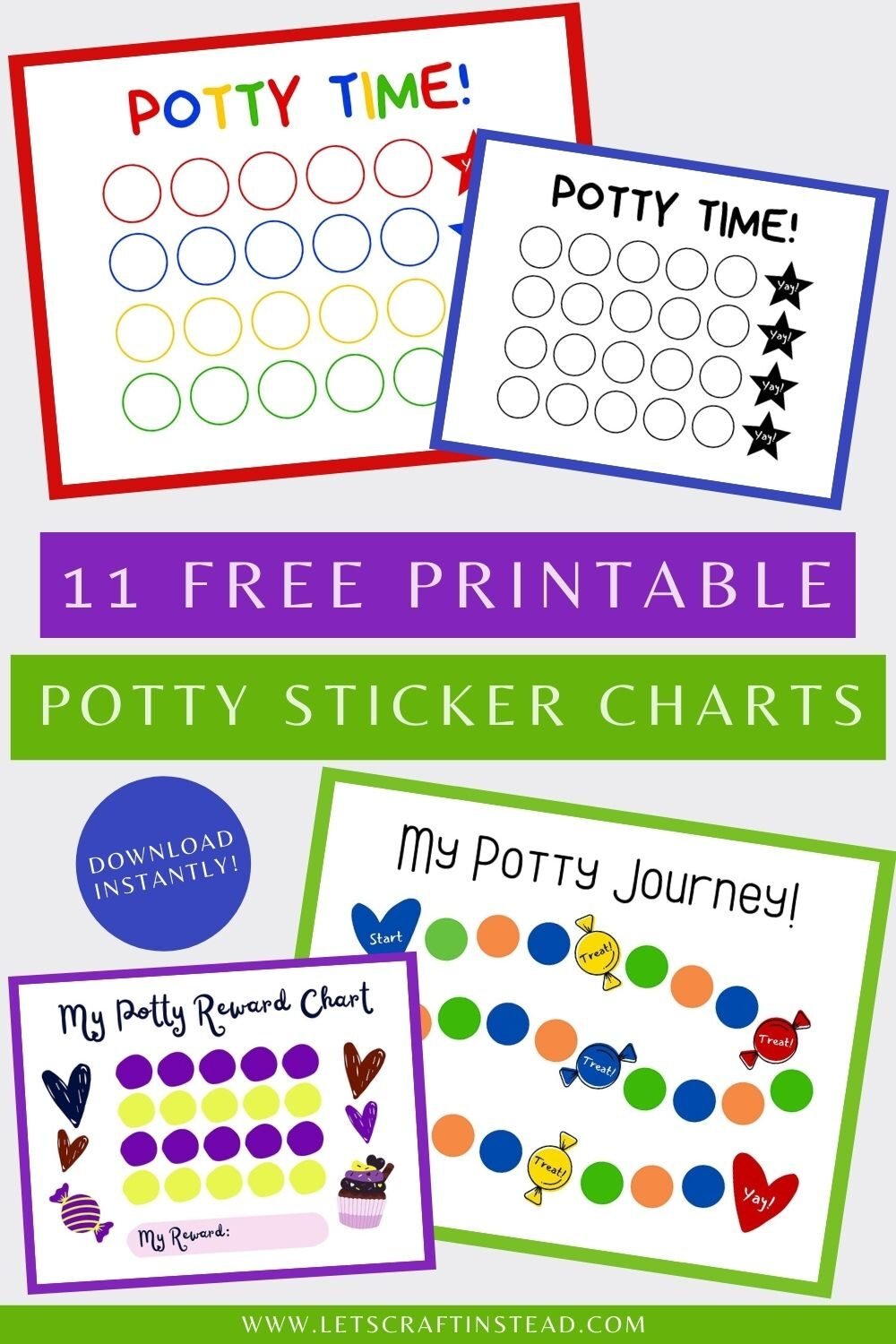
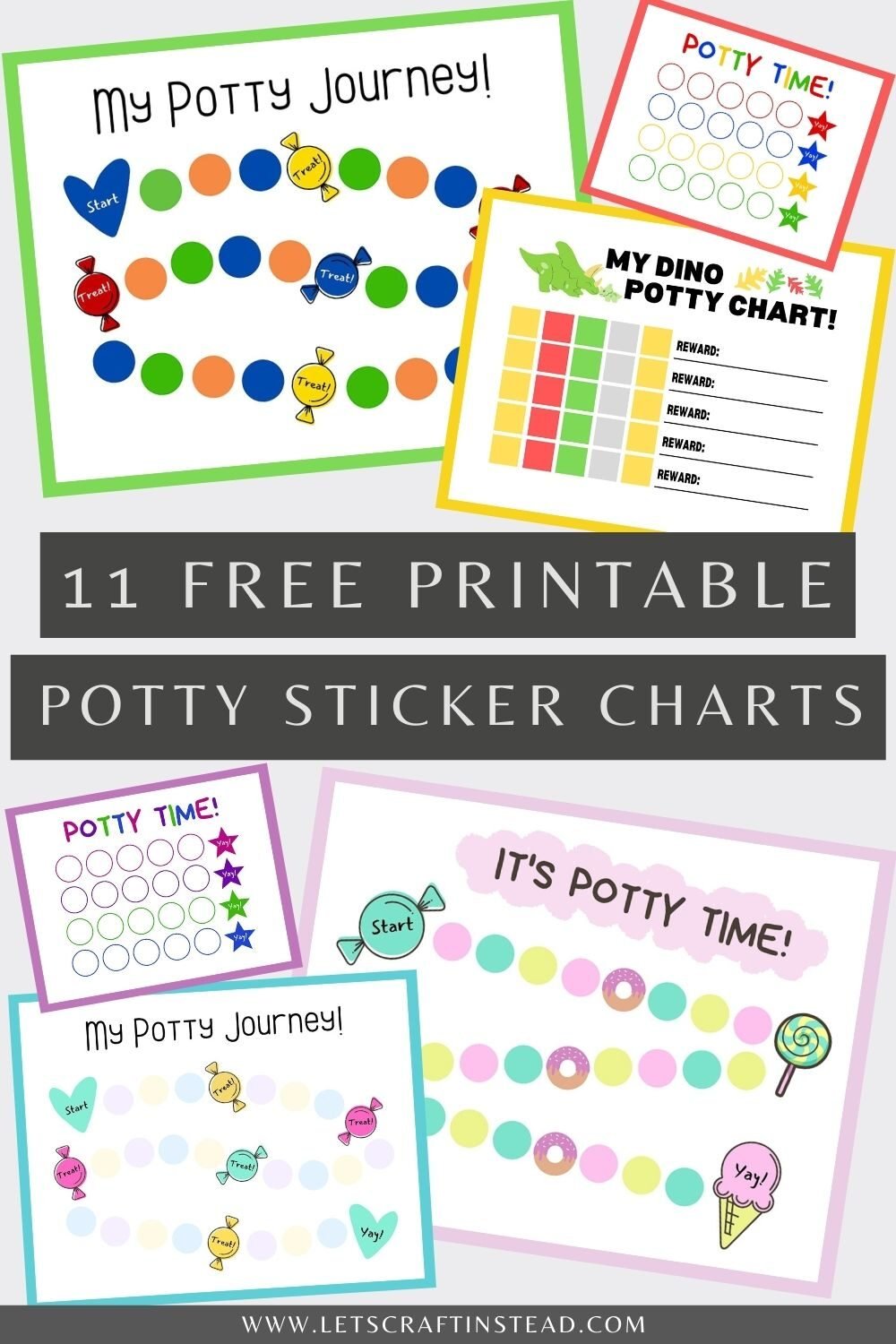
Looking for free printable potty charts? I designed 11 sticker chart layouts, and I describe each one below so you can pick a style or recreate it at home. These potty training charts are designed for use with stickers and are sure to be a hit with your kids!
It’s time for some more printables! And today we’re talking potty training 🙂 My daughter is, thankfully, finally potty trained. It was a long process—she did not potty train early.
We ended up having a lot of success with books about potty training and using a potty training sticker chart. So I decided to design a few more printable potty sticker charts for you guys in hopes that it will help you at some point!
There are 11 designs in this post. Free printable PDFs are ready to download below—US Letter and A4 for each design, no email signup. Each description explains the layout (how many sticker spaces and where the rewards go) so you can pick the right chart for your child.
Last updated: October 27, 2026
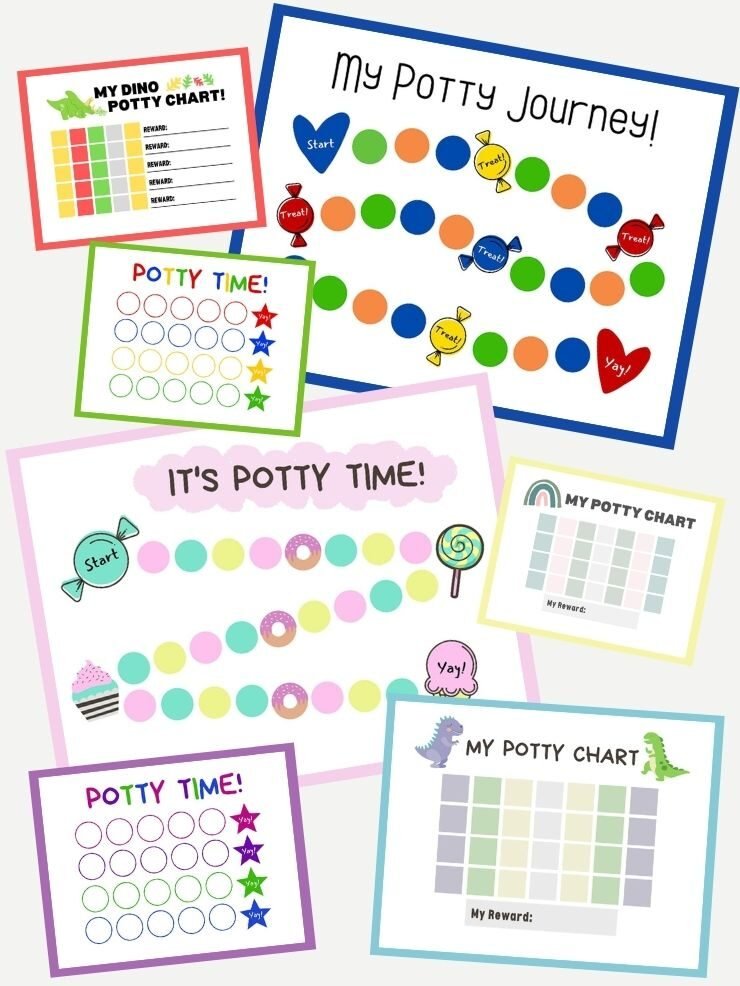
11 free potty chart designs for stickers
1. Board game potty chart (pastel)
Okay, so whatever your position on using treats or candy as rewards for potty training…you have to admit this is a cute potty training sticker chart! Haha. I tried to make it more “board game” like.
Every few successes earns the kid a treat. You don’t have to use candy…but you probably should because they’ll ask why it looks like they get candy 😉
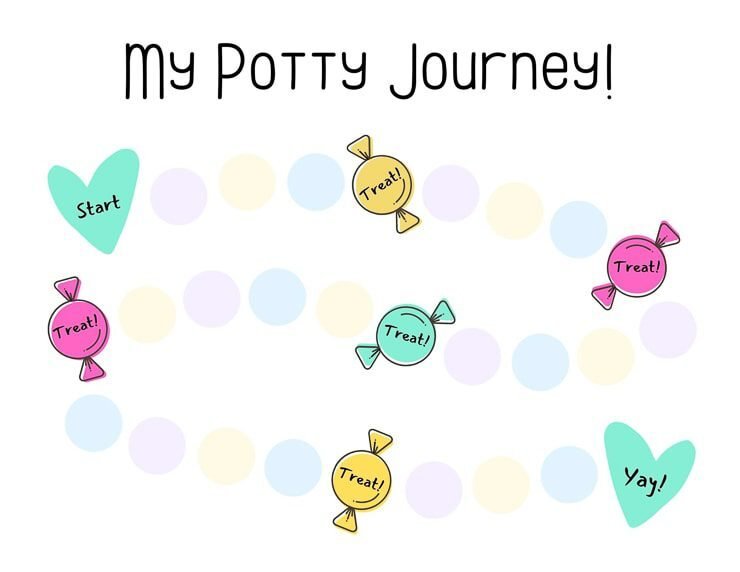
Download: US Letter PDF · A4 PDF (no email signup)
2. Board game potty chart (bold colors)
And here’s a version of the same board game potty sticker chart using bold colors instead of pastels. They are the same chart, just different colors. Pick your favorite!
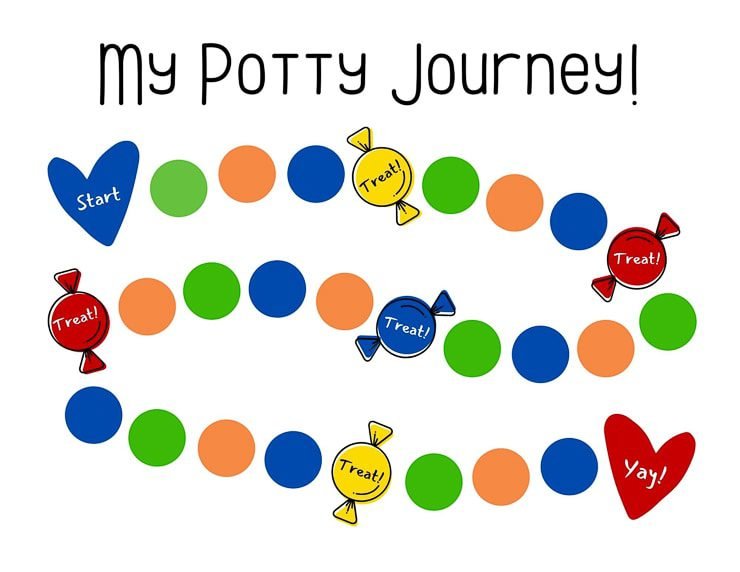
Download: US Letter PDF · A4 PDF (no email signup)
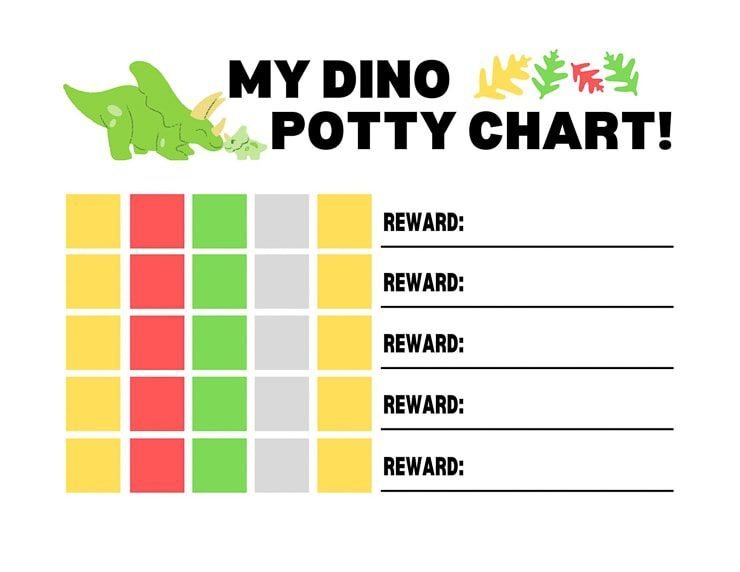
3. Five stickers per reward chart
This one is a slightly different approach. Instead of a game, there are 5 slots for each reward. You might like these better if you prefer to use non-food or non-candy rewards. Write a reward in that they can toward after 5 successful potties!
Download: US Letter PDF · A4 PDF (no email signup)
4. Five stickers per reward chart (muted colors)
And here’s a similar version that uses more muted colors. Same approach: space for 5 stickers for each reward, and space for 5 rewards.
Download: US Letter PDF · A4 PDF (no email signup)
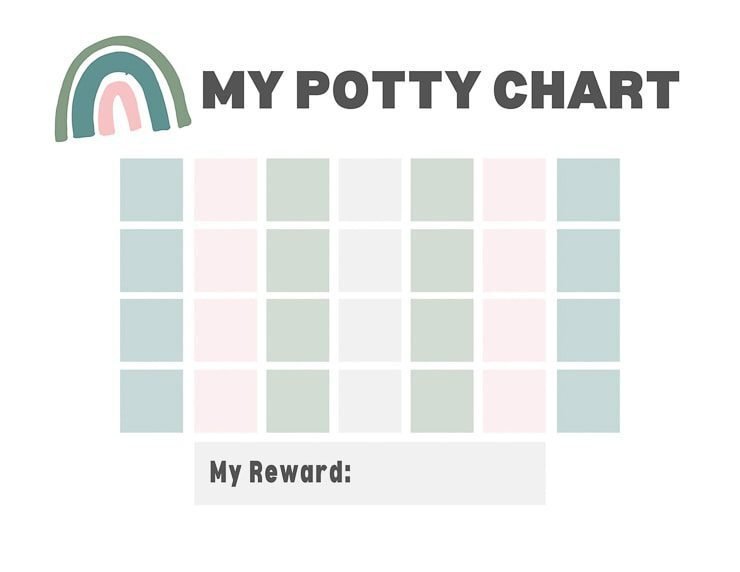
5. Rainbow chart with 28 squares
This one makes the kids work a bit harder for it. It has space at the bottom for one reward to work toward and 28 squares. This might be a good option if you’re just getting started and rewarding for “tries” instead of just “successes.”
Download: US Letter PDF · A4 PDF (no email signup)
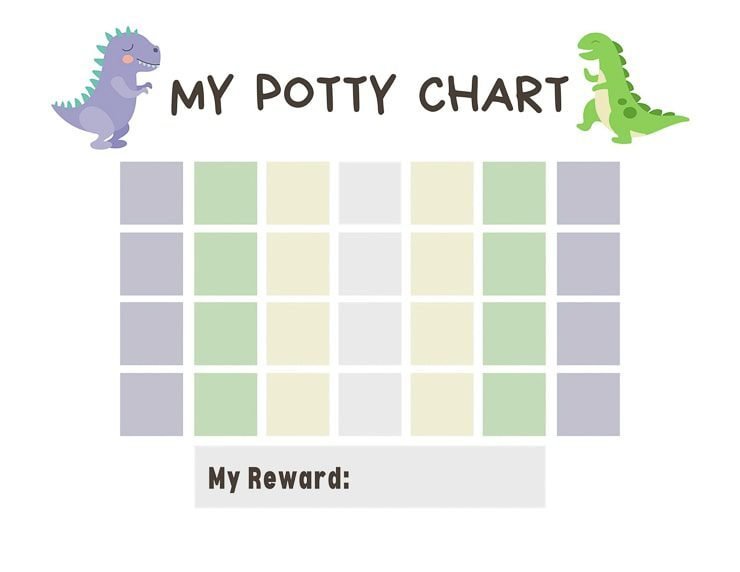
6. Dinosaur chart with 28 squares
And this one is just the same as the previous rainbow-themed chart—it just has different colors and dinosaurs. A space for a reward plus 28 squares.
Download: US Letter PDF · A4 PDF (no email signup)
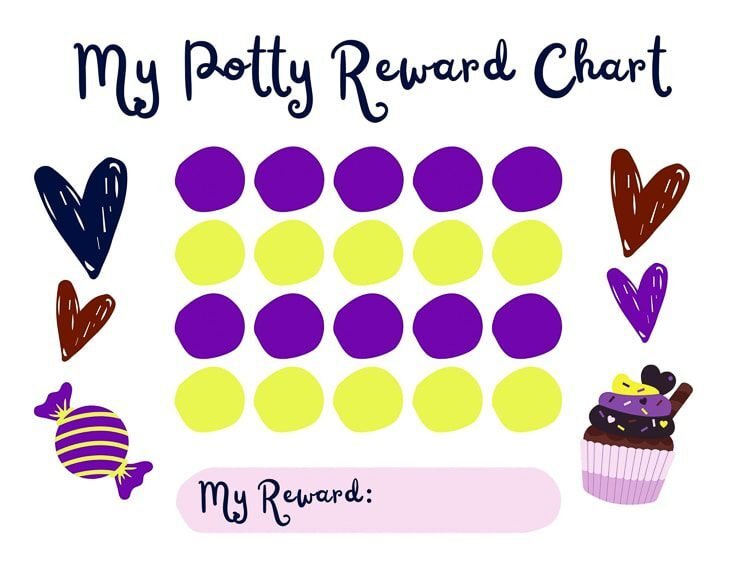
7. Blank chart with 20 sticker circles
This one is a great choice if you want to have your kid work toward a big reward, but 28 squares is a bit too much. This chart is blank and has 20 circles for stickers with space to write in a reward on the bottom of the printable.
Download: US Letter PDF · A4 PDF (no email signup)
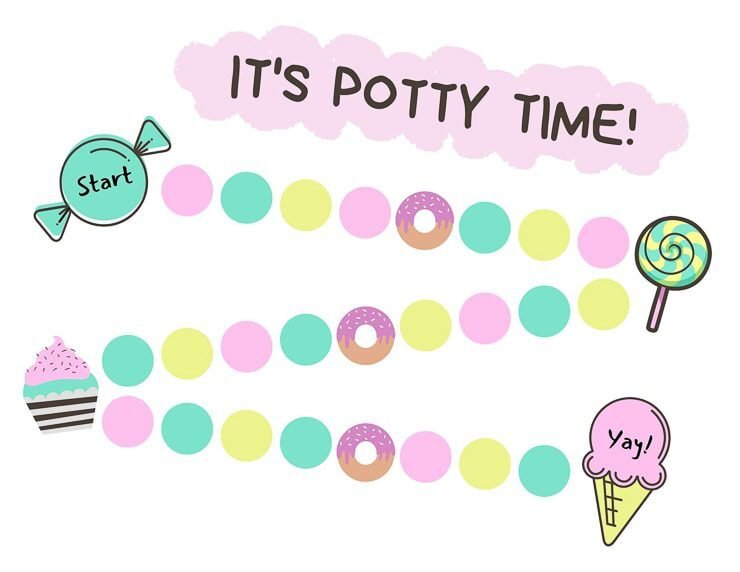
8. Board game chart with big and small rewards
And this one is probably my favorite! I am a fan of the “board game” approach to these charts since it sets milestones and helps game-ify the process even more. Spots for big rewards and smaller rewards.
Download: US Letter PDF · A4 PDF (no email signup)
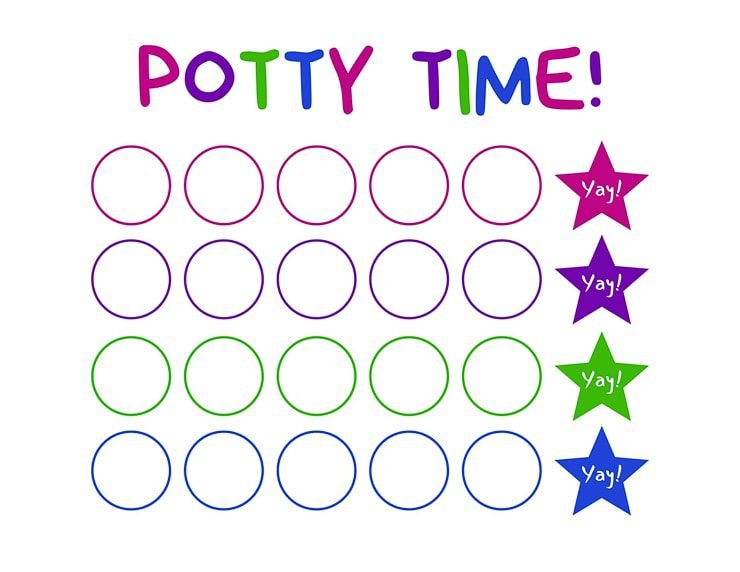
9–11. Simple five-sticker star charts
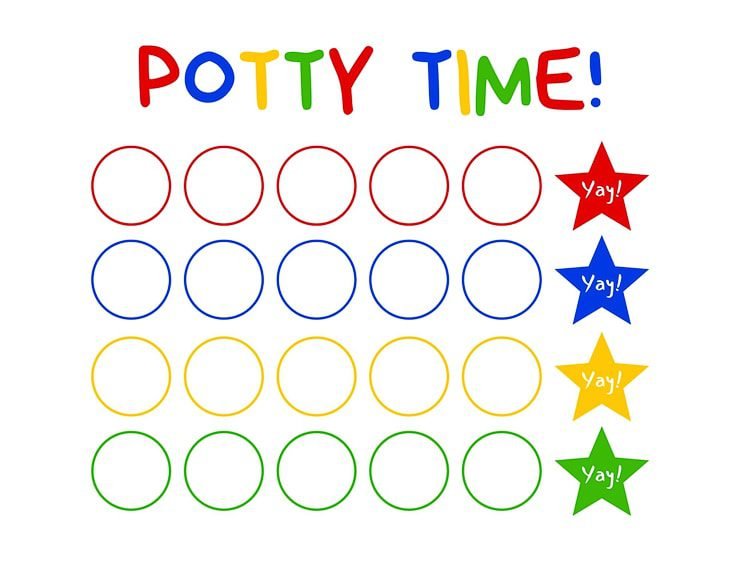
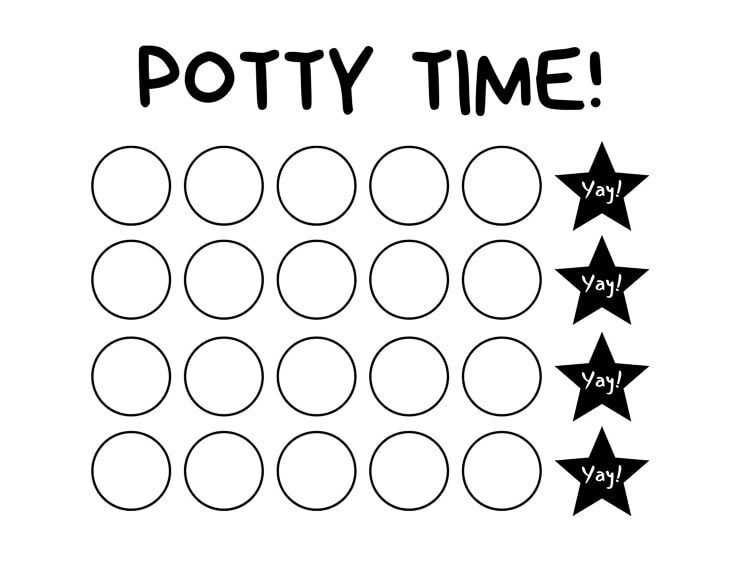
If you’re just looking for something simple, these last three are for you. Each printable potty chart left in the list if a straightforward approach: 5 spots for stickers and a star indicating it’s reward time.
Download: US Letter PDF · A4 PDF (no email signup)
Same as the last one, just uses different colors for different preferences. These are also great if you don’t want to do candy and food rewards since there isn’t anything on there tempting them!
Download: US Letter PDF · A4 PDF (no email signup)
And the last one, a plain ol’ version that is just black and white. Great for printing at home because it doesn’t use too much ink, and really simple and straightforward.
Download: US Letter PDF · A4 PDF (no email signup)
When to start potty training
The NHS says almost all children can be potty trained between 18 months and 2½ years old, and that you don’t need to wait for your child to show signs or ask for the potty before you start. Its suggested prep steps include reading potty books together, practicing sitting on the potty, and giving some nappy-free (diaper-free) time. Most importantly, praise the effort, not just the result. If you have questions about your own child, your pediatrician or health visitor is the person to ask. (Source: NHS: Potty training your child, checked October 14, 2026.)
How to use a potty training sticker chart
Every child is ready for potty training at a different time, so follow your child’s cues (and your pediatrician’s advice if you have questions). Once you start, a sticker chart works best when it’s simple and consistent:
- Put it where your child can see it, like on the bathroom door or the fridge, at their eye level.
- Reward tries at first, then successes. A chart with lots of squares (like the 28-square designs) works well for rewarding every try early on.
- Choose rewards ahead of time. Write them on the chart so your child knows what they’re working toward. Rewards don’t have to be candy: stickers, a special activity, or a small toy all work.
- Celebrate each sticker. Let your child place the sticker themselves; that’s half the fun.
A daily routine for potty tries
The NHS suggests making potty trips part of the everyday routine rather than waiting for your child to tell you every time. Common times to try are:
- right after waking up
- after meals and snacks
- before leaving the house, and when you pass a bathroom while you’re out
- before naps and before bed
Each of these is a natural moment to add a sticker for trying. Over time your child may start to show you when they need to go, for example by telling you, fidgeting or going quiet. When you notice those signs, gently suggest a try.
Setting up your chart, step by step
- Pick a chart for the stage. Beginners do best with lots of quick wins, so use the five-sticker designs or star charts first. Save the 28-square charts for when trips are more routine.
- Decide what earns a sticker. At first, sitting on the potty and trying counts. Later you can move to stickers for a successful trip or for staying dry between trips.
- Agree on rewards before you start. Write or draw them in the reward spaces so your child can see what’s coming.
- Explain it simply. Show your child the chart, the stickers and the first reward, and let them choose where it goes.
- Keep it the same everywhere. If your child spends time at daycare or with grandparents, print a second copy and share how you’re using it. Consistency helps.
When accidents happen
Accidents are a normal part of learning. The NHS advises staying calm, cleaning up together and moving on, without getting angry or upset with your child. Don’t take stickers away for an accident. The chart should only ever record progress, so it stays something your child is proud of.
Common sticking points
- Won’t sit for long enough: read a short book or sing a song together while they sit.
- Doesn’t like the bathroom: some children find the flush noise or smells overwhelming. Small changes can help; the NHS suggests ear defenders for a child who’s sensitive to the sound of flushing.
- Going backward after a big change: starting daycare, moving, or a new baby can all affect potty training. Keep routines as steady as you can, and go back to rewarding tries if needed.
- Hard or painful poops: the NHS says children should be passing soft poops at least every other day. If your child is straining or their poops are hard, talk to your pediatrician or health visitor before moving away from diapers, as constipation can make potty training harder.
Naps and nighttime
Daytime and nighttime dryness are separate stages. The NHS suggests keeping diapers for naps and nighttime at first. Once your child regularly stays dry during naps, you can try pants at nap time. Most children learn to stay dry at night after they’re dry during the day, and this happens naturally over time rather than being something you need to train. That’s why these charts focus on daytime trips.
Guidance summarized from NHS: Potty training your child, checked November 3, 2026. For questions about your own child, ask your pediatrician or health visitor.
Print sizes: US Letter or A4
All of these designs are laid out in portrait for US Letter (8.5 x 11 in) or A4 paper. Pick the size that matches your printer—both are linked under each design.
More free printable charts for kids
Looking for more charts? See my printable sleep sticker chart, my 10 free printable weekly chore charts, and my 15 free printable savings trackers for the grown-ups.
Free printable downloads
Every design above has a free US Letter and A4 PDF. Click the download links under each chart—no email signup required. Prefer to DIY? Draw a winding “board game” path or a simple grid on a sheet of paper, add the number of sticker spaces that suits your child (5, 20, or 28 all work), and leave a box at the bottom to write in the reward.
Potty chart FAQ
Do potty charts work?
For a lot of families, yes, as one part of the process. They worked really well for us alongside potty books. A chart makes progress visible and gives your child something to look forward to, but it isn’t magic: if your child is upset or resisting, it’s fine to take a break and try again later.
Which chart is best for beginners?
For a beginner, pick a chart with lots of small steps and frequent rewards, like the five-stickers-per-reward designs (3 and 4) or the simple star charts (9–11). Reward sitting on the potty and trying, not only successes, and move to a bigger chart like the 28-square rainbow or dinosaur designs once your child gets the hang of it.
Is there a free printable potty chart I can download today?
Yes. Free US Letter and A4 PDFs for all 11 designs are linked under each chart above—no email signup.
What rewards can I use besides candy?
Stickers on their own, a favorite activity, an extra bedtime story, a trip to the park, or a small toy all work. Write the reward on the chart so your child knows what they’re working toward.
When should we stop using the chart?
When using the potty has become part of the daily routine, you can phase the chart out, for example by spacing rewards further apart until you no longer need them.
Pin my 11 printable potty chart designs!